Anne Hathaway's 2026 Takeover: The 5-Film Masterplan Redefining Hollywood Comebacks
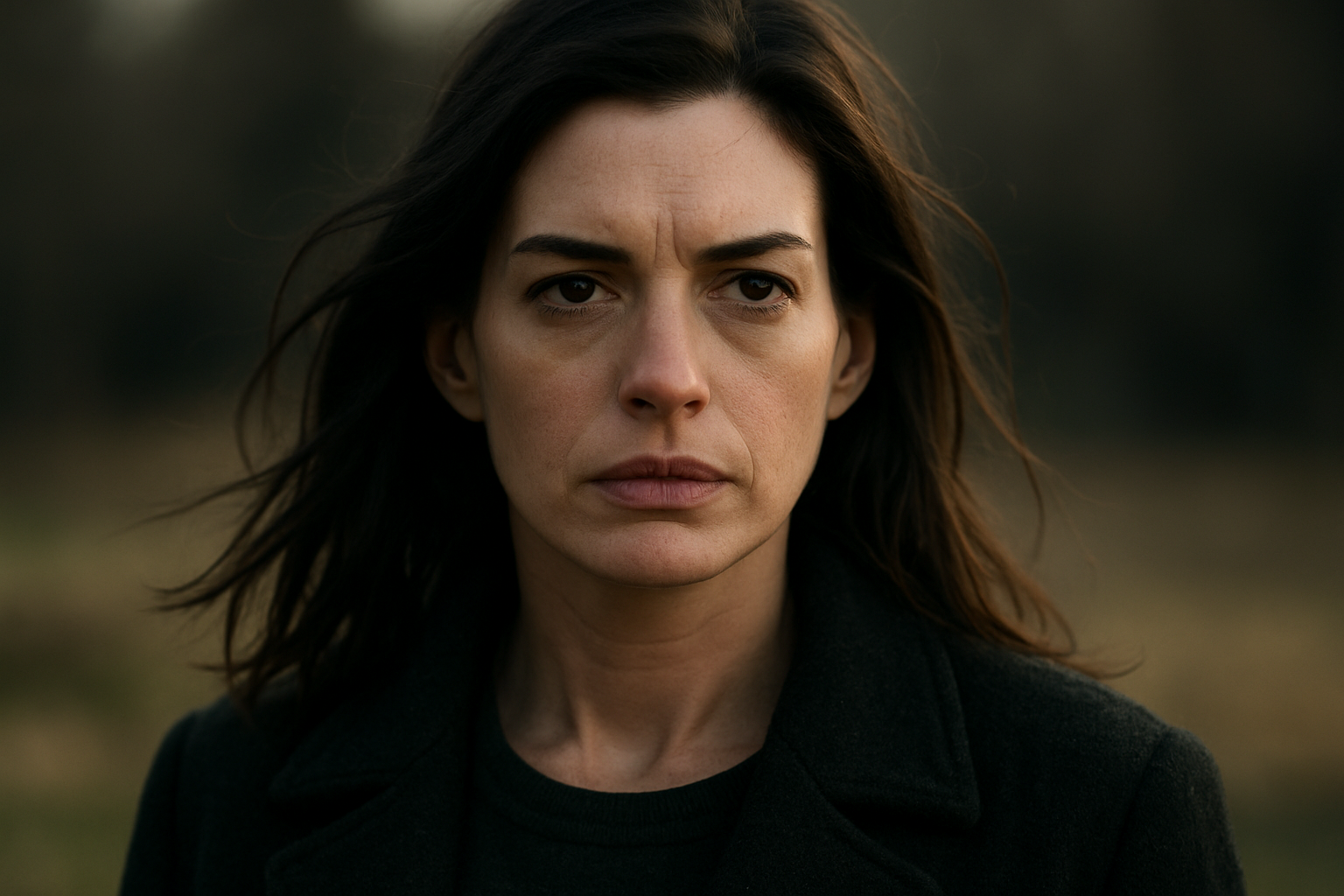
Anne Hathaway's 2026 Takeover: The 5-Film Masterplan Redefining Hollywood Comebacks
Remember when Anne Hathaway was everywhere? From a princess in Genovia to an assistant at Runway magazine, her face defined the 2000s. Then, the spotlight shifted. While she never disappeared, the deafening buzz of her early career faded into a more strategic murmur.
This is the classic Hollywood paradox: an industry built on hits, yet plagued by a short memory. An actor's peak is often treated as a singular event, followed by a slow fade into "where are they now?" territory. For actresses, this arc can be brutally accelerated.
The true challenge, therefore, isn't just landing another big role—it's engineering a second act that proves your staying power is no fluke.
Anne Hathaway’s solution for 2026 is so audacious it just might work. It’s not one comeback vehicle. It’s five. A meticulously planned, genre-spanning onslaught of films designed not to remind you she’s here, but to prove she never left. This isn't a comeback. It's a full-scale renaissance.
Deconstructing the 2026 Hathaway Renaissance: A Strategic Slate
The Core Concept: Volume and Versatility
In business, we talk about market saturation. In Hollywood, they call it "the year of [Actor's Name]." Typically, this happens by accident—a lucky streak of releases. Hathaway’s 2026 is different. This is a deliberate saturation campaign built on two pillars: sheer volume and calculated versatility.
Releasing five major films in twelve months is a power move. It cuts through the noise of our fragmented media landscape, building a cultural critical mass where she becomes the default topic of conversation.
But volume alone is a blunt instrument. The genius is in the genre spread. From legacy sequels to auteur-driven sci-fi, each film serves a distinct strategic purpose. It’s a portfolio approach to stardom.
Project Deep Dive 1: The Nostalgia Play ("The Devil Wears Prada 2" & "The Princess Diaries 3")
Let’s be clear: nostalgia is a guaranteed audience-engagement engine. Leveraging iconic intellectual property (IP) is the closest thing to a sure bet in a risky industry. Hathaway is doubling down on her two most iconic franchises.
The Devil Wears Prada 2 isn't just a sequel; it's a statement. The narrative evolves from Andy Sachs, the wide-eyed assistant, to Andy Sachs, the industry powerhouse. This mirrors Hathaway’s own journey, allowing her to reclaim the character with the authority of two decades of experience.
Similarly, The Princess Diaries 3 taps into a multi-generational fanbase. It’s a warm, familiar counterbalance to the sharper edges of her other projects. These films are the foundation—high-floor, high-awareness projects that guarantee her a seat at the table.
Project Deep Dive 2: The Auteur Collaborations ("The Odyssey" & "Flowervale Street")
If the nostalgia plays are the foundation, the auteur projects are the pillars of credibility. This is where Hathaway signals she’s not just a movie star from the 2000s; she’s a serious actor for the 2020s.
Re-teaming with Christopher Nolan for The Odyssey is the ultimate prestige play. Nolan’s films are cinematic events that command respect, dominate the box office, and anchor awards season. Being welcomed back into his fold is a massive vote of confidence.
Then there’s Flowervale Street. Teaming with director David Robert Mitchell (It Follows) and producer J.J. Abrams is a masterstroke in genre credibility. This sci-fi film shows she’s willing to venture into innovative, director-driven storytelling—the kind of risk that builds a lasting legacy.
Project Deep Dive 3: The Wild Card ("Mother Mary")
Every good portfolio needs a wild card. Mother Mary, an original drama, is that X-factor. Sandwiched between giants, this film has the potential to be the quiet awards contender. It exists purely for the art of storytelling, without the burden of existing IP.
This is crucial. It prevents her brand from being solely defined by franchise work, gives critics something to champion, and demonstrates raw dramatic range. In a year of saturation, this could be the project that reminds everyone of the talent that won her an Oscar for Les Misérables.
Case Study: The Pre-2026 Blueprint – How Hathaway Built This Moment
The Foundation: A Career of Calculated Risks
Hathaway’s career has never been passive. She made a conscious pivot from Disney-fied innocence to the raw torment of Les Misérables—a calculated risk that paid off with an Oscar but also fueled the early 2010s wave of "Hathahate." She navigated that not by fighting it head-on, but by working steadily through it.
The Strategic Pivot: Selective Work and Brand Recalibration
Her film choices in the late 2010s and early 2020s—like Colossal and Ocean’s 8—were selective and interesting, but not designed to dominate the conversation. This was a period of brand recalibration.
Concurrently, she masterfully maintained visibility as a fashion icon. High-profile campaigns, like her work with Bulgari, kept her associated with elegance and power off-screen. This dual-track approach kept her relevant without overexposing her acting.
The 2025 Gap Year: A Strategic Silence Before the Storm
Perhaps the most brilliant part of the plan: 2025. She had no major film releases. In the attention economy, an absence can be a powerful prelude. It creates a vacuum, making the audience and the industry miss you. By going quiet, she reset the clock. The 2026 onslaught feels less like a continuation and more like an explosive return—the business equivalent of a major product launch.
Risks and Challenges: Can the Market Handle a Hathaway Saturation?
The Oversaturation Paradox
History shows that too much of one face too quickly can lead to audience fatigue. The line between "The Year of Hathaway" and "Hathaway Exhaustion" is razor-thin.
The key differentiator is variety. Her slate is so genre-diverse—comedy-drama, epic, sci-fi, original drama, family sequel—that each film appeals to a different audience quadrant. It’s a market segmentation strategy applied to film releases.
The Critical and Commercial Balancing Act
The expectations for a Nolan epic are not the same as for a Princess Diaries sequel. Managing this narrative across multiple press tours will be a tonal high-wire act. Her team will need to carefully tailor each campaign, allowing each film its own space to breathe to prevent one film’s reception from negatively impacting another’s.
The Evolving Box Office and Streaming Landscape
The 2026 theatrical model is a hybrid beast. While The Odyssey and Prada 2 are surefire theatrical events, a film like Mother Mary may find its audience on streaming. How each project is released and monetized will significantly impact its reception.
Furthermore, her authentic off-screen persona—like her viral moments as an Arsenal superfan—provides relatable, non-film engagement that humanizes the saturation and is pure gold for modern marketing.
The Future Outlook: What Hathaway's 2026 Means for Hollywood
Redefining the Career Arc for A-List Actresses
Hathaway’s 2026 is a potential game-changer. It moves the model beyond "peak and fade" to a phased, deliberate renaissance. It’s a blueprint for proactively managing the second half of a career, balancing commercial demands, critical respect, and artistic goals. It proves longevity is about strategically occupying multiple spaces at once.
The Cultural Singularity: Predicting the 2026 Narrative Cycle
We can already predict the media cycle: initial hype ("Hathaway is Back!"), mid-year think pieces on oversaturation, and, if the films are strong, a year-end inversion into celebration and "Hathaway nostalgia." She could experience an entire cultural lifecycle—hype, backlash, redemption—within a single calendar year.
Legacy Cemented: From Movie Star to Enduring Icon
Success in 2026 would transition Anne Hathaway from a star of specific films to a defining industry pillar. It cements a legacy of resilience, strategic intelligence, and versatile talent—an adaptable, enduring career not tied to a single era.
Conclusion: More Than a Comeback, A Reclamation
Anne Hathaway’s 2026 is a masterclass in career management. It’s a leveraged buyout of her own narrative. By combining nostalgic IP, auteur trust, strategic volume, and a pre-planned silence, she hasn’t just booked a busy year.
She has engineered a reclamation.
This slate proves her staying power is as formidable as her talent. She’s not waiting for Hollywood to give her a second act. She’s building her own.
FAQ: Your Anne Hathaway 2026 Questions, Answered
What are all five movies Anne Hathaway is releasing in 2026?
Her confirmed slate includes: The Devil Wears Prada 2 (sequel), The Princess Diaries 3 (sequel), The Odyssey (epic drama with Christopher Nolan), Flowervale Street (sci-fi with David Robert Mitchell), and Mother Mary (original drama).
Is The Devil Wears Prada 2 really happening, and what's it about?
Yes, it’s officially in production. While plot details are guarded, the core premise follows Andy Sachs (Hathaway) as a powerful executive in the publishing world, navigating a new dynamic with Miranda Priestly (Meryl Streep).
With so many releases, is there a risk of audience fatigue?
It’s the biggest risk. However, the strategic spread across genres targets different audience segments, which mitigates direct competition. The challenge is managing the cultural narrative to avoid "Hathaway exhaustion."
How is she managing the publicity for five major films?
This is a colossal logistical challenge. Her team is likely planning a staggered, film-specific press strategy. Her authentic off-screen persona (like her Arsenal fandom) also provides low-effort, high-impact content that keeps her in the conversation without constant film promotion.
Could this strategy become a model for other actors' career revivals?
Absolutely. It demonstrates the power of a coordinated "portfolio" release strategy over relying on one magic bullet project. For it to work, an actor needs iconic IP to leverage, strong director relationships, and the credibility to pull off diverse roles. It’s a high-risk, high-reward blueprint.